Am I a Candidate for Dental Implants?
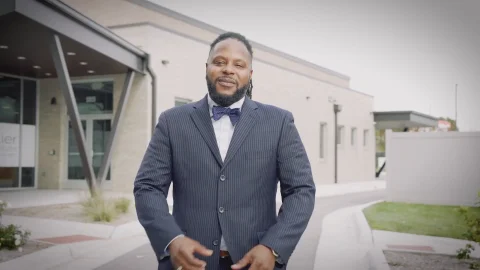
“Am I even a candidate?” is the question that keeps more people out of an oral surgeon’s office than cost, fear, or time. Dr. Alexander Heatrice, owner of Premier Institute of Oral & Facial Surgery, and treatment coordinator Stephanie Sarver joined Studio STL to answer it directly, and to talk about what actually happens when someone finally walks through the door. The conversation is below, lightly edited for length and clarity, with additional context added.
Being Told No Years Ago Doesn’t Settle the Question Today
Studio STL: What do folks need to know about implants? Because there are some people who feel they may not even be a candidate for them.
Dr. Heatrice: A lot of people do not realize that things have changed over the years. If you were once told that you are not a candidate, you may be, because with the new technology and new surgical techniques, that has very much put everyone in the box where they can become a candidate for implants.
This is worth sitting with, because it is the single most common reason patients delay. Someone was told ten or fifteen years ago that there was not enough bone, or that their case was too complicated, and they filed that away as a permanent answer. It was accurate at the time. It may not be accurate now.
What changed is not one breakthrough but the accumulation of several. Three-dimensional imaging replaced flat X-rays, so surgeons can now measure bone volume and quality precisely rather than estimating. Grafting techniques improved, making it possible to rebuild bone that was previously considered inadequate. And techniques were developed that bypass the deficient bone entirely by anchoring into denser bone elsewhere in the facial skeleton. A patient who was correctly told no under one set of tools may get a different answer under another.
If bone loss is the specific reason you were turned away, Dr. Heatrice discusses that situation in more detail in another segment on treating complicated cases.
Single Implants, Implant Bridges, and Full Mouth Reconstruction
Studio STL: What types of implants are we talking about, and how has the technology improved?
Dr. Heatrice: One of the implants is standard, where it is just one missing tooth, a single implant. If someone has multiple missing teeth, then you are looking at a possible implant bridge. And then there are some people who need a full mouth reconstruction, and we call that upper and lower arches. So it depends on the scenario. The best thing is that when you get your consultation, you will be able to find out where you lie in those different options.
Those three categories cover most of what patients come in for, and the difference between them is less about severity than about what is being replaced.
A single implant
One post placed in the jaw, supporting one crown. This is the option for a single missing or failing tooth, and it has the advantage of leaving the neighboring teeth untouched. A traditional bridge requires reducing the healthy teeth on either side of the gap to serve as anchors. An implant does not.
An implant bridge
When several teeth in a row are missing, it is generally not necessary to place an implant for each one. A smaller number of implants can support a bridge spanning the gap. This reduces the number of surgical sites and, in many cases, the overall cost compared to individual implants.
Full mouth reconstruction
For patients missing most or all of their teeth in one or both jaws, treatment addresses the arch as a whole rather than tooth by tooth. Dr. Heatrice refers to this as upper and lower arches. A full arch of replacement teeth can be supported on a limited number of strategically placed implants, which is the principle behind All-on-4 treatment. For patients who have been wearing dentures, this is usually the conversation they are having.
Read more about how implants are planned and placed on our overview of implant placement page, or learn about All-on-4 treatment for patients missing most or all of their teeth.
What Patients Are Carrying When They Walk In
Studio STL: Stephanie, you work very closely with the patients. What is their energy when they first come in wanting to improve their smile?
Stephanie Sarver: Honestly, most of my patients are walking in the doors feeling nervous, feeling scared, a bit overwhelmed, even a little embarrassed about their situation. Most of these patients have been in this situation for some time. Missing multiple teeth, loose dentures, or even in pain. They have just been putting off the treatment that they need, and the reason is they are wondering: am I even a candidate for this? Is this going to be painful? Can I afford it? What are my options, and how long is this going to take?
Those five questions come up so consistently that they are worth naming plainly, because most people assume they are the only one asking them.
Am I a candidate? This is answered at the consultation, and it is answered with imaging rather than a guess. Will it hurt? Procedures are performed under anesthesia or sedation, and options are discussed based on the procedure and your comfort level. Can I afford it? This is a conversation to have with the practice directly, and it is not a reason to avoid a consultation, since you cannot weigh cost against options you have not been told about. What are my options? Usually more than one, which is the point of walking through them. How long will it take? This depends entirely on the treatment and whether any preparatory work is needed first.
The embarrassment Stephanie describes is worth addressing on its own. Patients who have been missing teeth for years often arrive apologizing for the condition of their mouth. There is nothing to apologize for. Tooth loss follows from decay, gum disease, injury, medication side effects, and circumstances well outside anyone’s control, and it is the routine work of an oral surgery practice.
What Actually Happens at the Consultation
Studio STL: What is it like when you sit down and talk with them about how the process is going to go?
Stephanie Sarver: Most of our patients are more concerned about what their actual options are. What we do is really take the time to listen and evaluate their individual needs and specific situation, and go over all their options so they can make the best decision for themselves without feeling pressured.
The distinction being drawn here matters. There is a difference between a practice that presents one recommended treatment and a practice that lays out the range of options that genuinely apply and lets the patient weigh them. Patients frequently arrive having been given a single path elsewhere, without knowing that alternatives existed at different price points, different timelines, or different levels of surgical involvement.
Going over all the options means the patient leaves able to explain their own situation to a spouse, a family member, or their general dentist. That is a different outcome than leaving with a treatment plan they do not fully understand.
What Patients Say Afterward
Studio STL: What are some of the stories you hear from patients after they get their implants?
Dr. Heatrice: One of them is thank God for you. That is one of the most rewarding comments I have ever had someone say to me. The reason they say it is because all their lives they have been challenged with the fact that they could not eat, or their self-confidence has been ruined because they cannot go out and feel comfortable being who they are in public. For someone to say that, it touches you deep.
Two things are named there, and they tend to travel together. The functional problem is eating. Patients with missing teeth or loose dentures narrow their diet over time, often without registering that they are doing it, avoiding foods that are difficult or unpredictable to chew.
The social problem is the one people talk about less. Avoiding restaurants. Speaking with a hand near the mouth. Declining photographs. Turning down invitations. It accumulates quietly, and patients often only recognize how much they had adjusted their life around it once the adjustment is no longer necessary.
Hear more from our patients on our patient testimonials page.
Where to Start
Dr. Heatrice: Once you reach out to us and you get to meet one of us, we will make sure we get you down the right path to success.
The first appointment is an evaluation and a conversation. You are not committing to treatment by scheduling it, and the answer to whether you are a candidate is not something that can be determined from a phone call or a photograph. It requires imaging and an examination.
Find Out Where You Stand
A consultation is the only way to know which options apply to your situation. Our team will walk you through what is possible and answer your questions before you decide anything.